Stories with more contextNews Explainers · Independent guides
LogicLabsa Journal
← All storiesNews Explainers / Guide 26

Watch an AI demonstration with useful questions

A polished AI demonstration can illustrate a capability while leaving important questions about setup, error rates, human assistance, and ordinary use unanswered. Good coverage reports both what viewers saw and what the test does not establish.
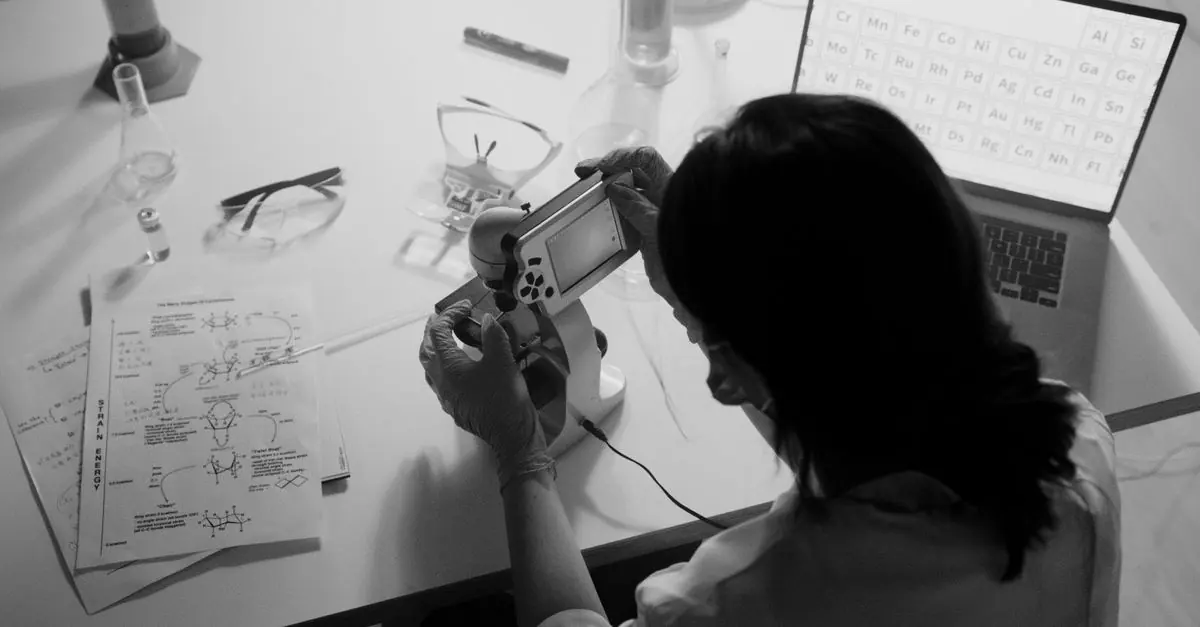
Researcher conducts experiments using a microscope in a monochrome lab setting.

The setup behind the screen

A selected example

Identify the specific task, input, and output. Ask whether the demo was live, recorded, or edited and whether the presenters selected the examples in advance. A successful run matters, but reliability requires repeated tests across varied cases and clear criteria for success. For tools used in consequential settings, ask how mistakes are detected, who reviews the output, and what happens when the system is uncertain. Compare the demonstration with an independent evaluation when one exists, taking care that benchmark scores may test a different task from the one shown. Cost, speed, data handling, and accessibility also influence whether a capability is useful outside a stage presentation. A careful story can appreciate a real advance without converting a single controlled example into a general promise.

What task was really tested

A video shows a system answering a complex question correctly. It does not show how many prompts were tried, whether a person edited the answer, or how it performs on less familiar examples. Those details determine how broadly the result can be interpreted.

Failures need a place in the story

After watching a demo, write down the exact input, visible result, and what you know about selection and editing. List two tests that would reveal whether the feature works reliably for ordinary users.

Human help and hidden steps

Design five varied prompts for the task shown in a hypothetical demo, including one ambiguous case. Define what a good answer would look like before testing. Note how you would record failures as well as successes.

Original illustration for Watch an AI demonstration with useful questions
Original editorial illustration

From demo to dependable use

A failed independent attempt may reflect a different product version or setup; a successful attempt may still be cherry-picked. Look for repeatable testing and clearly described conditions before making a broad claim.

Put the source in sequence: Watch an AI demonstration with useful questions

Before drawing a practical conclusion, write down the comparison that would answer the real question. A national average may conceal a local difference; a single striking case may be unrepresentative; and a proposal may have no effect until it is adopted and implemented. Keep the unit, denominator, time window, and any missing observations beside the number. This makes it easier to tell whether two apparently similar figures can be compared at all.

It helps to separate three lines in your notes: what the source directly records, what you infer from it, and what remains open. The first line should be traceable to a document or observation. The second should explain the reasoning and alternatives. The third is where missing data, possible revisions, and competing explanations belong. If the second line becomes more confident than the first can support, narrow the wording rather than hiding the uncertainty.

Turn context into a useful comparison

Return to the question when fresh evidence appears. A revised dataset, a follow-up study, a final decision, or a change in method can alter the answer without making the original inquiry pointless. Record what changed and whether it affects the main conclusion or only a detail. A useful correction is visible and specific: it lets a reader understand the earlier statement, the new evidence, and the reason for the updated wording.

  • What task was really tested
  • A selected example
  • From demo to dependable use

A short explanation often hides several decisions about which source to use, which period to describe, and which people or places to include. Save the original record alongside the summary and note the date of each. If a later account changes a definition or introduces a correction, the earlier version remains useful for seeing how the interpretation evolved. A repeated claim is not independent confirmation when every repetition points back to the same unexamined source.

Continue reading

More perspectives